White scale
One of the better visual clues for hardness, especially on showerheads, faucets and heating surfaces.
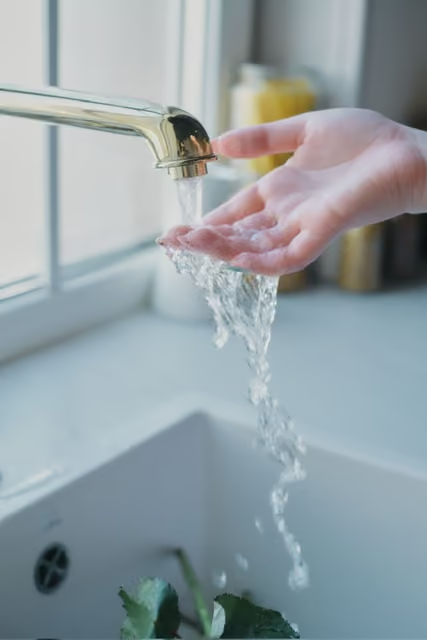
Common signs include white scale, spots on glassware, mineral buildup on fixtures, soap that lathers poorly and recurring deposits around water-using equipment. USGS defines hardness primarily by dissolved calcium and magnesium and publishes the standard hardness ranges used in water-quality work. Source: USGS hardness scale.
| Hardness as CaCO3 | USGS description | What you may notice |
|---|---|---|
| 0–60 mg/L | Soft | Little hardness scale |
| 61–120 mg/L | Moderately hard | Some spotting or deposits may appear |
| 121–180 mg/L | Hard | Scale and soap-performance issues are more common |
| Over 180 mg/L | Very hard | More pronounced scale and mineral buildup |
One of the better visual clues for hardness, especially on showerheads, faucets and heating surfaces.
These point more toward iron or manganese than hardness. See orange-stain causes.
This is not a hardness symptom. Hydrogen sulfide, bacteria or a water-heater issue may be involved. See sulfur odor causes.
USGS notes that hard water can make soap harder to lather and can leave residue on skin and surfaces.
Measure hardness rather than relying only on symptoms. A hardness result tells you whether softening makes sense and how much treatment capacity the home needs. AquaTrust can screen hardness during an in-home visit.
If the result confirms hardness, see Water Softeners and Hard Water Treatment.
Hardness is not the same as contamination. A home can have hard water and still need separate testing for health-related contaminants when those are a concern.
AquaTrust can test hardness and explain whether a softener actually fits the water.
Request a Free Water TestCall AquaTrust