Scale
Mineral deposits can accumulate on fixtures, shower glass and water-heating surfaces. Hardness is an aesthetic/operational water condition rather than a reason to assume the water is unsafe.

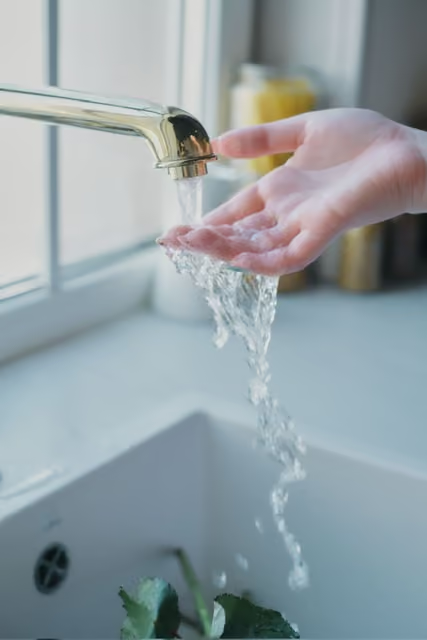
Hard water contains dissolved calcium and magnesium, usually reported as milligrams per liter of calcium carbonate or grains per gallon. USGS classifies 0–60 mg/L as soft, 61–120 mg/L as moderately hard, 121–180 mg/L as hard and more than 180 mg/L as very hard. Source: USGS Hardness of Water.
| Hardness as CaCO3 | USGS description | What homeowners may notice |
|---|---|---|
| 0–60 mg/L | Soft | Little hardness scale |
| 61–120 mg/L | Moderately hard | Some spotting or mineral buildup may appear |
| 121–180 mg/L | Hard | Scale and soap-performance complaints become more common |
| Over 180 mg/L | Very hard | More pronounced scale and mineral buildup are common |
Mineral deposits can accumulate on fixtures, shower glass and water-heating surfaces. Hardness is an aesthetic/operational water condition rather than a reason to assume the water is unsafe.
Hardness minerals react with soap, which can increase soap use and leave residue on fixtures or laundry.
Ion-exchange softening is the standard treatment category for reducing hardness minerals. Treatment capacity and regeneration settings should be based on measured hardness, water demand and any iron or manganese that may load the resin. A carbon filter is not a substitute for a softener because it targets different water-quality concerns.
Learn more on the Water Softeners page or compare categories in Water Softener vs. Whole-House Filter.
Testing matters: white residue does not always prove hardness. A hardness result tells you whether softening is appropriate and how the system should be sized.
AquaTrust can test hardness at your home and explain whether softening fits your water and household demand.
Request a Free Water TestCall AquaTrust