Iron is not one treatment problem
Clear-water dissolved iron can behave differently from oxidized particles already visible in the water. The presence of manganese, sulfur odor or low pH can change the best treatment approach.


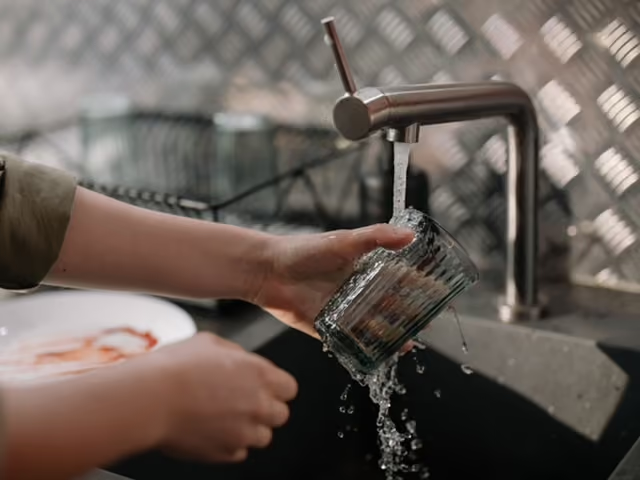

Iron is commonly associated with orange, reddish, or brown staining on fixtures, sinks, tubs, laundry, and plumbing surfaces.

Manganese can contribute to dark gray or black staining and discoloration, especially as concentrations and oxidation conditions change.
Some homeowners notice metallic taste, visible particles, or water that changes color after standing or being exposed to air.

Hardness, acidity, oxidation state, and other water conditions can change which treatment approach is practical and effective.
Some water conditions call for oxidation followed by filtration so dissolved metals can be converted and captured.
In certain water conditions, a properly selected softener may address limited iron while also treating hardness, but it is not the answer for every iron or manganese problem.
Low pH can affect plumbing and treatment performance, so acidic water may need to be addressed as part of the overall system design.
Iron, manganese, hardness, pH, sulfur odor, and other conditions may overlap. The treatment plan should account for the full water profile rather than one symptom alone.
Iron commonly causes orange, reddish or brown staining, while manganese can contribute to dark gray or black staining. The treatment depends on concentration, oxidation state, pH, hardness and household flow—not just the stain color. EPA lists iron and manganese among secondary drinking-water constituents because they can cause staining, taste and other aesthetic problems. Source: EPA Secondary Drinking Water Standards.
Clear-water dissolved iron can behave differently from oxidized particles already visible in the water. The presence of manganese, sulfur odor or low pH can change the best treatment approach.
Oxidation and filter-media performance are affected by water chemistry. Low pH may need to be addressed before or as part of iron/manganese treatment. See low-pH treatment.
| Water condition | Treatment direction | What must be checked |
|---|---|---|
| Limited dissolved iron with hardness | Softening may help in some cases | Iron level, pH, manganese and resin loading |
| Higher iron or manganese | Oxidation + filtration or specialized media | pH, dissolved oxygen, flow and backwash capacity |
| Visible sediment / oxidized particles | Particle control plus treatment of the underlying cause | Particle size, source and well conditions |
| Iron plus sulfur odor | Combined oxidation strategy may be appropriate | Hydrogen sulfide, iron, manganese and pH |
AquaTrust tests the conditions that drive treatment selection and then chooses equipment around the actual water. For a symptom-first explanation, see What Causes Orange Stains From Well Water? and the Rhode Island-specific Iron & Manganese Staining Guide.
Backwashing filters need adequate drain flow, oxidizing systems may need periodic chemical or air-system service, and specialty media has a finite life. Pretreatment and pH correction can determine whether the primary filter performs reliably.
AquaTrust can screen the treatment conditions at your home and explain whether iron, manganese, pH or another factor is driving the problem.
Request a Free Water TestCall AquaTrust