Hard water?
Neither generic carbon filtration nor an under-sink RO replaces a properly sized softener for hardness throughout the home. Water Softeners.

REVERSE OSMOSIS DRINKING WATER
Reverse osmosis provides dedicated drinking-water filtration for Rhode Island and Southeastern Massachusetts homes. AquaTrust helps match the system to your water and your household needs.


RO uses a semipermeable membrane and is commonly applied at a dedicated faucet for drinking and cooking water. Performance depends on membrane selection, source-water pressure, pretreatment, temperature, water chemistry and timely filter and membrane replacement.

Whole-home systems treat the incoming supply before it reaches fixtures. The equipment may be designed for sediment, chlorine, iron, manganese, odor or another condition depending on the media. A generic whole-house filter does not remove every possible contaminant.
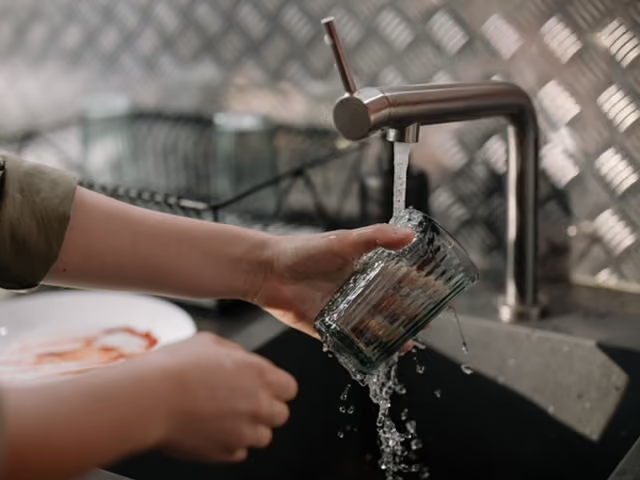
Some homes use both: whole-home treatment for the general water supply and RO for drinking and cooking. This can be a sensible combination when testing shows different treatment goals at the point of entry and point of use.

Start by identifying hardness, iron, manganese, chlorine, pH, odor, sediment and any contaminant-specific concerns. Then choose the treatment location and technology. This testing-first approach helps avoid paying for equipment that solves the wrong problem.
Reverse osmosis and whole-home filtration solve different problems in different parts of the plumbing system. RO is usually point-of-use drinking-water treatment, while whole-home filtration treats water as it enters the house. Some homes need one; some benefit from both.
| Question | Reverse osmosis | Whole-home filtration |
|---|---|---|
| Where is it installed? | Usually at one drinking-water faucet | At the main water entry point |
| What is the main goal? | Reduce dissolved substances in drinking water | Treat selected conditions throughout the house |
| Does it soften hard water? | No whole-home benefit | Not unless the system includes a softener |
| Can it address chlorine taste/odor? | At the RO faucet, often with carbon pretreatment | Yes, with appropriate carbon media |
| Can a home use both? | Yes | Yes |
RO is usually the better fit when the goal is high-quality drinking water at one faucet. It can be useful for broad dissolved-solids reduction and contaminant-specific treatment when the installed system has an appropriate verified performance claim. See AquaTrust Reverse Osmosis.
Whole-home filtration makes more sense when the concern affects showers, laundry, fixtures or all household water. Sediment, chlorine-related taste/odor, iron, manganese and other conditions require different media and treatment designs. See Whole-Home Filtration.
Neither generic carbon filtration nor an under-sink RO replaces a properly sized softener for hardness throughout the home. Water Softeners.
Test iron, manganese, pH, hardness, sulfur-related conditions and health contaminants appropriately before choosing the treatment sequence. Well Water Testing.
A common combination: whole-home treatment protects plumbing and handles water throughout the house, while RO provides an additional drinking-water stage at the kitchen sink.
AquaTrust can help determine whether your home needs RO, whole-home filtration, softening, or a combination.
Request a Free Water TestCall AquaTrust